Food Industry Monitor | 2026
18 June 2026 - University of Gastronomic Sciences, Pollenzo
The observatory on the performance and business models of Italian food companies conducted by the University of Gastronomic Sciences in Pollenzo and Ceresio Investors

XII EDITION - “Development Models Compared”
The Italian food sector continues to demonstrate a strong capacity for resilience in a complex macroeconomic environment, while showing increasing pressure on profitability. This is what emerges from the 12th edition of the Food Industry Monitor, the Observatory analysing the performance and business models of Italian food companies, developed by the University of Gastronomic Sciences of Pollenzo in collaboration with Ceresio Investors. The results were presented today in Pollenzo during the conference “Development Models Compared”.
KEY FINDINGS OF THE RESEARCH
- The sector continues to grow, albeit at a slower pace: in 2025, food sector revenues increased by 3.3%, below expectations but in line with the Italian economy.
- Profitability is weakening: ROS fell from 6.6% to 4.6% and ROIC from 8.9% to 5.2%, reflecting margin compression and increased invested capital.
- Exports are slowing, but remain a strategic lever: after +8.7% in 2024, food exports grew by 4.4% in 2025; for 2026–2027, the Observatory forecasts annual growth above 7%, provided the US–Iran crisis is resolved by the end of June, leading to lower energy prices.
- Governance matters more than ever: companies with more open, inclusive and structured governance, as well as those with shared leadership, show higher profitability levels.
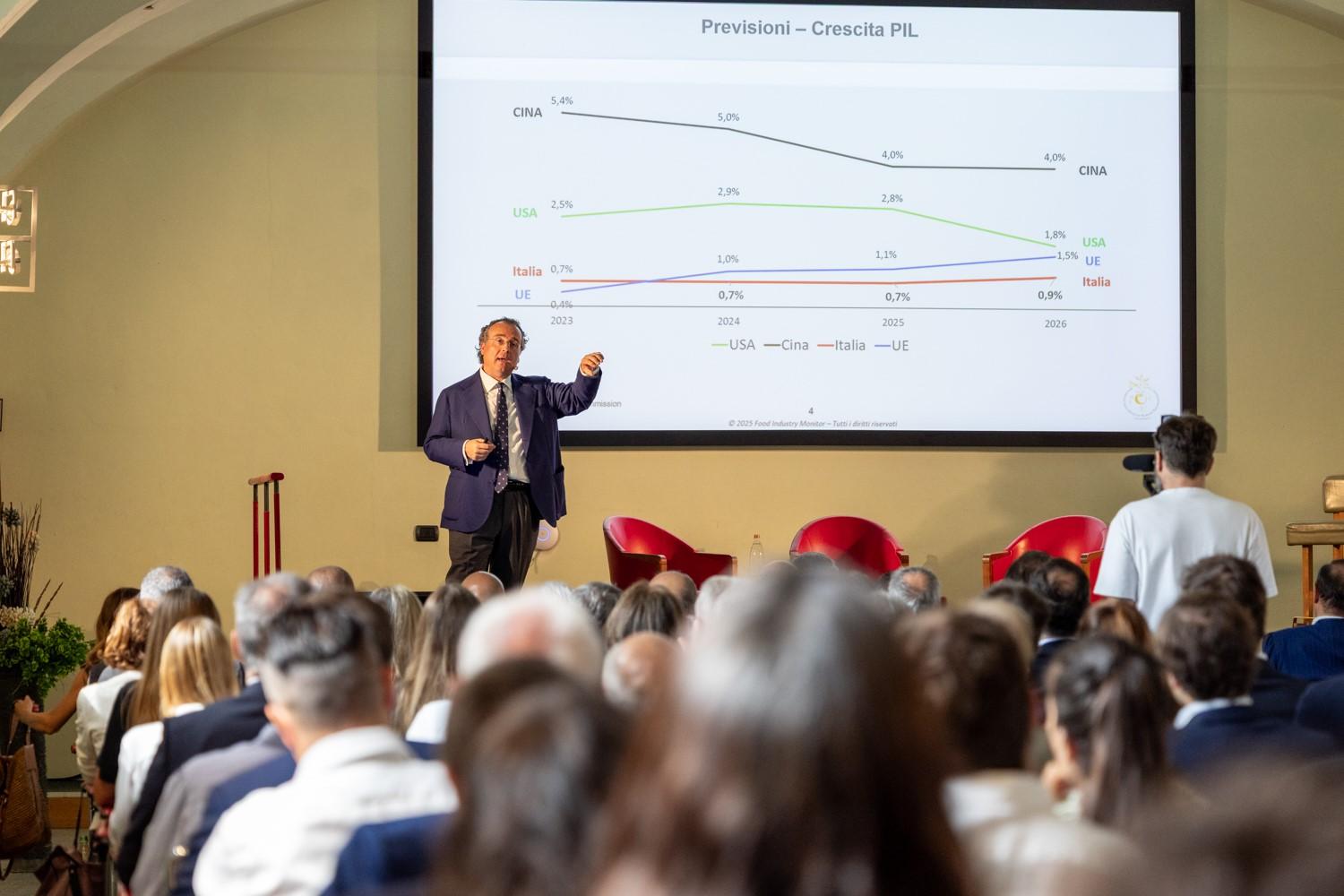
A RESILIENT SECTOR UNDER PRESSURE
In 2025, the food sector recorded revenue growth of 3.3%, confirming its resilience in a complex macroeconomic context. However, this figure fell short of expectations and reflects slowing domestic demand and increased cost pressures. The profitability picture is more critical. The decline in ROS and ROIC indicates that many companies chose to defend volumes and maintain their presence in Italian distribution channels, even at the cost of margin compression. While the sector’s financial strength remains high, a slight deterioration in indebtedness is observed.
EXPORTS: SLOWDOWN IN 2025, RECOVERY EXPECTED THEREAFTER
Following strong export growth in 2024—also driven by advance purchasing ahead of potential US tariff measures—food exports increased by 4.4% in 2025, the lowest figure in the post-pandemic period. Nevertheless, the outlook for 2026 and 2027 remains positive. The Observatory forecasts export growth above 7% in both years, supported by international markets and the ability of Italian food products to maintain strong competitive positioning abroad. However, uncertainties remain, linked to the evolution of the US economy, price stability in international markets, and the global geopolitical and trade environment. Tensions related to energy prices may also lead to a significant revision of export flows. At sector level, the most promising performances in 2026 are expected in flour (+5.9%), oil (+6.3%), coffee (+4.8%), and frozen foods (+3.8%). The wine sector (+3.6%) also shows favourable prospects, particularly driven by demand for sparkling wines—especially Prosecco—in international markets.



INFLATION AND CONSUMPTION: THE RISK OF PURELY NOMINAL GROWTH
Forecasts for 2026 indicate sector growth in line with 2025 at 3.3%, while expected growth for 2027 is 3.4%. However, these figures should be interpreted with caution: in Italy, inflation is expected to exceed 3% in 2026, partly due to energy cost pressures, potentially absorbing much of the sector’s nominal growth. For 2027, inflation is expected to return to more normal levels, around 1.9%, making growth dynamics clearer. In this context, the food sector continues to confirm its counter-cyclical nature, although it is not immune to macroeconomic pressures affecting household purchasing power and domestic consumption.
THE STRATEGIC ISSUE: PRODUCT SEGMENTATION AND BUSINESS MODELS
The analysis of business models shows that just under 60% of companies in the sample offer a diversified product range across multiple lines. In several segments—such as dairy products and wine and spirits—segmentation is widespread; however, diversification does not always translate into better performance. Looking at revenue trends between 2018 and 2024, companies focused on a single product line show a slight advantage. This suggests that, in some cases, greater focus can lead to more effective market positioning, stronger specialisation, and more targeted investment. This finding aligns with the structure of the sample, characterised by a strong presence of small- and medium-sized family businesses, often oriented towards focused business models with deep competitive roots in a specific product category.
GOVERNANCE AND PERFORMANCE: ORGANISATIONAL QUALITY MAKES THE DIFFERENCE
One of the most significant findings of this edition of the Food Industry Monitor concerns the link between governance and corporate performance. Companies with more open, inclusive and structured governance models show higher profitability, confirming that governance quality is a key driver of competitiveness and long-term value creation. The analysis also highlights a positive impact of female CEOs on both return on investment and return on equity. Shared leadership—through the presence of multiple CEOs with strategic responsibilities—is also associated with superior performance, especially when co-CEOs include women. The food sector remains strongly characterised by family ownership: family businesses account for 70% of the sample. Within this group, multi-family companies outperform single-family firms in both ROI and ROE, suggesting that more advanced governance structures and more diversified ownership can foster greater managerial openness and the ability to address strategic and generational challenges.
GOVERNANCE AND PERFORMANCE: ORGANISATIONAL QUALITY MAKES THE DIFFERENCE
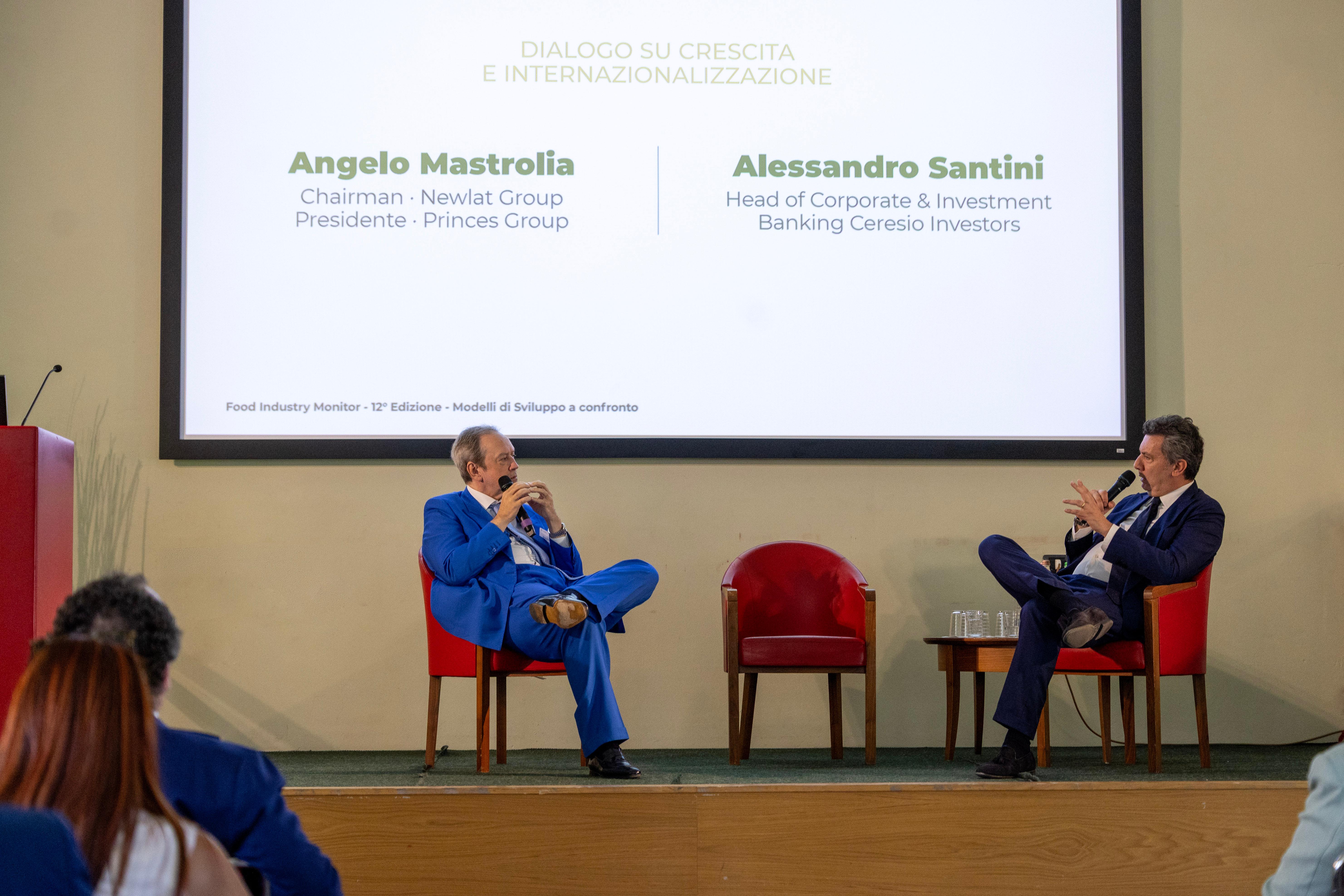
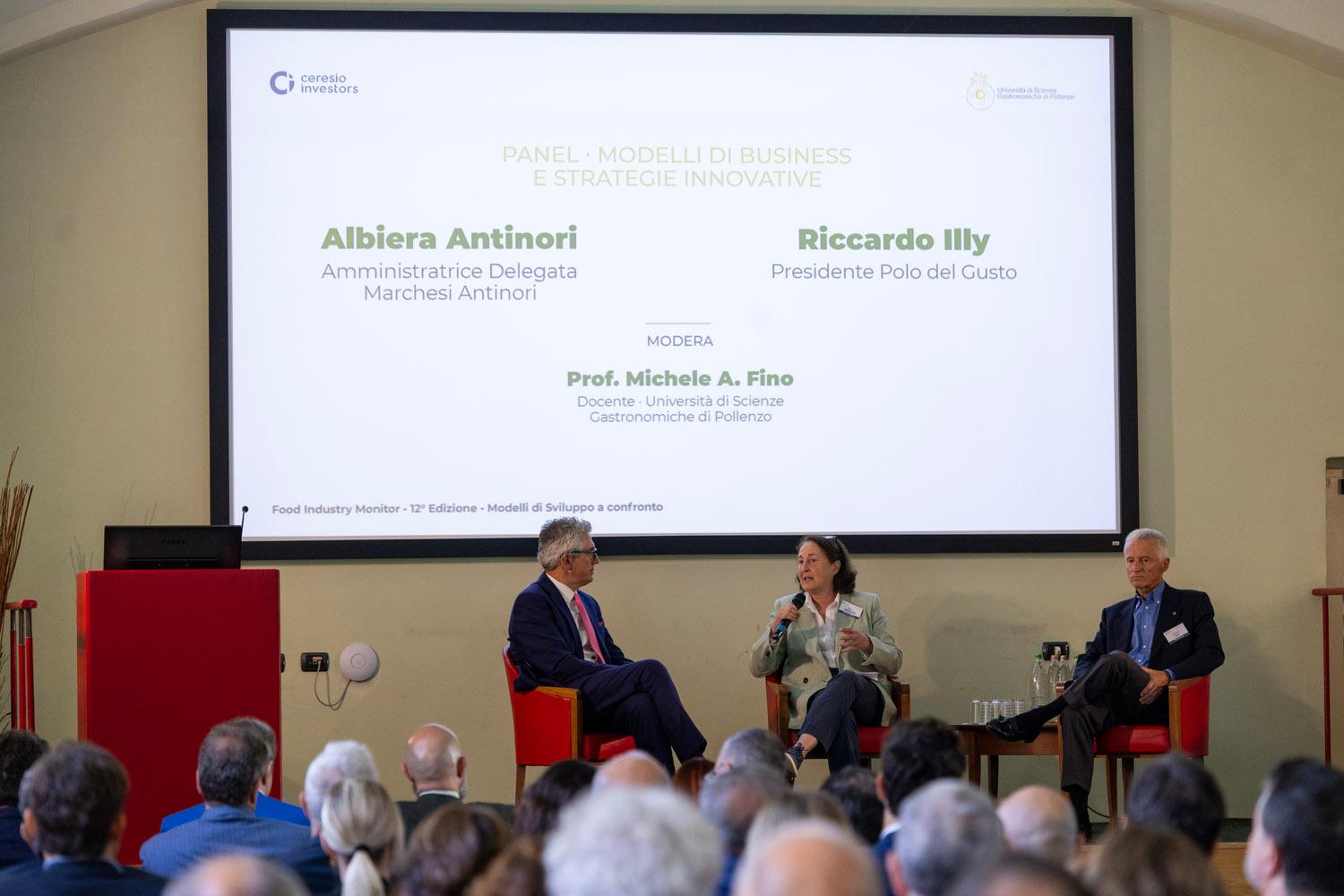
The presentation took place as part of the 12th edition of the Food Industry Monitor, dedicated to innovation, growth, and development models. Following opening remarks by Professor Nicola Perullo, Rector and Vice-President, and Gabriele Corte, General Manager of Banca del Ceresio SA, Professor Carmine Garzia presented the main findings of the research. The event also featured two in-depth discussion sessions with leading figures from the sector:
- Albiera Antinori (CEO, Marchesi Antinori) and Riccardo Illy (Chairman, Polo del Gusto) discussed innovation strategies and business models, moderated by Professor Michele Fino.
- Angelo Mastrolia (Chairman, Newlat Group and President, Princes Group) engaged in a discussion with Alessandro Santini on growth and internationalisation.

The conference concluded with a tribute to Carlo Petrini, founder of Slow Food and the University of Gastronomic Sciences, delivered by Oscar Farinetti, President of the Association of Friends of the University of Gastronomic Sciences of Pollenzo.
The Observatory analyses more than 820 companies, with aggregated revenues of approximately €85 billion, representing 14 segments of the food sector. It provides an integrated view of the main economic, financial and strategic dynamics, with a forward-looking perspective for 2026–2027.